QR Codes for Real Estate: Modern Property Marketing
Transform your property marketing with QR codes. Cover yard signs, virtual tours, open houses, and lead generation strategies for real estate professionals.

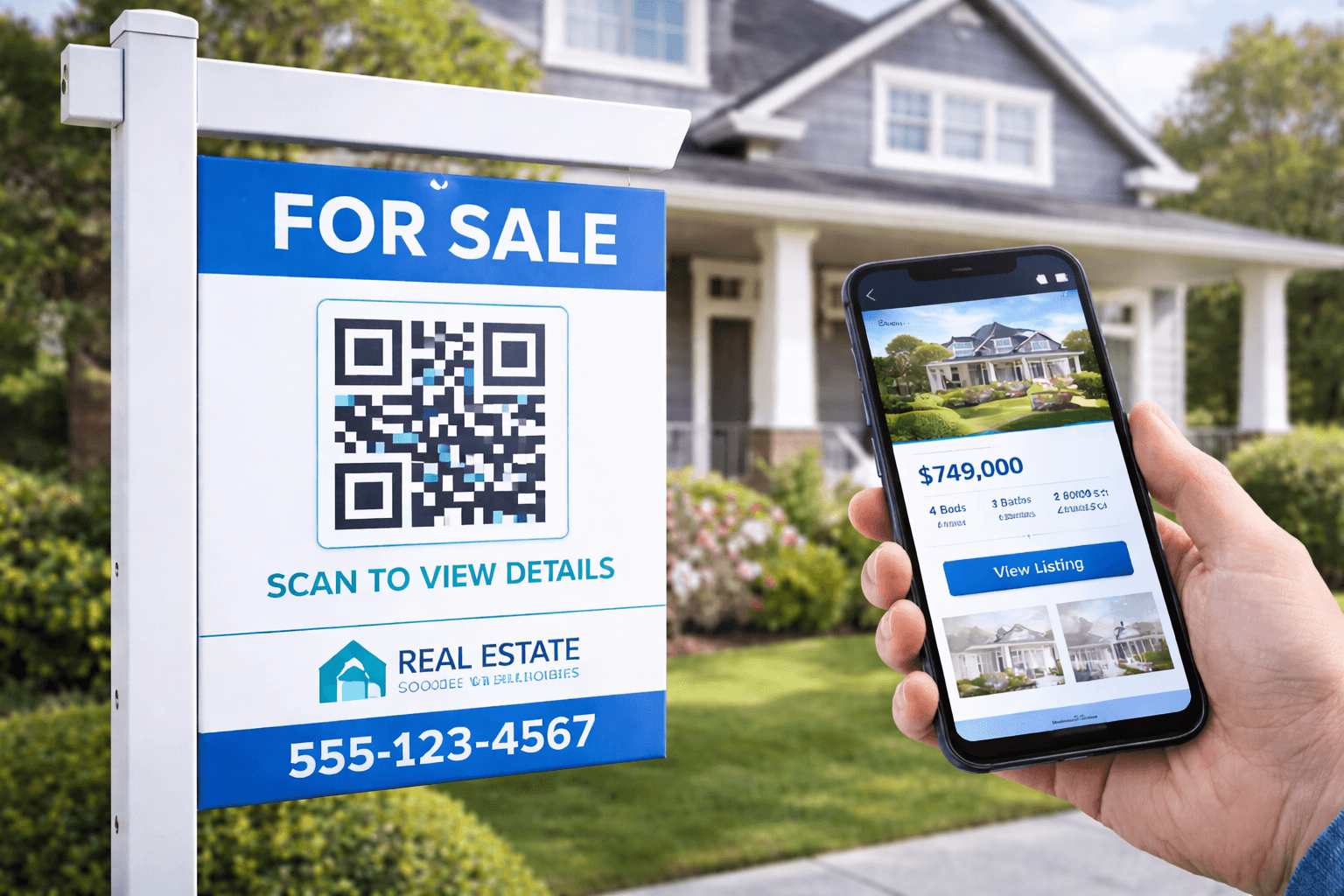
90% of home buyers start their search online, but properties exist in the physical world. QR codes bridge this gap, giving drive-by viewers instant access to listings, virtual tours, and agent contact information. 35% of real estate agents already use QR codes, with projections rising to 50% by 2025.
This guide covers everything real estate professionals need to implement QR codes effectively in property marketing.
Why QR Codes Work for Real Estate
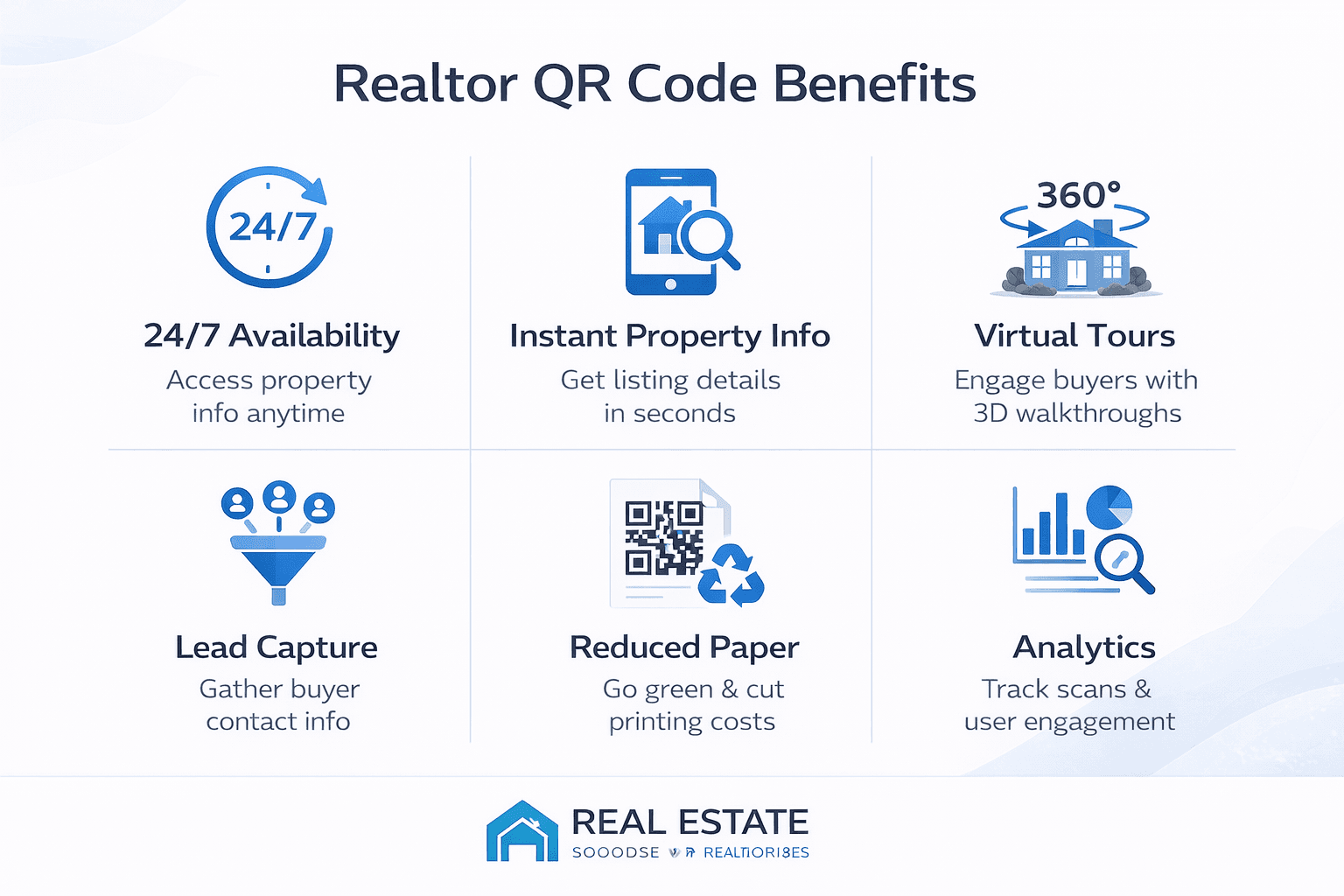
Real estate is uniquely suited for QR code marketing:
The drive-by problem: Buyers see properties from the street. They might note the address, forget it, or move on. QR codes capture interest at the moment of curiosity.
Information appetite: 67% of buyers want floor plans; 58% want virtual tours. A yard sign can't deliver this—but a QR code can.
Agent accessibility: Buyers often want immediate information but may hesitate to call. QR codes provide self-service access without commitment.
Market differentiation: Modern marketing signals a modern agent. QR codes demonstrate tech-savviness that appeals to digital-first buyers.
Yard Signs and Property Signage
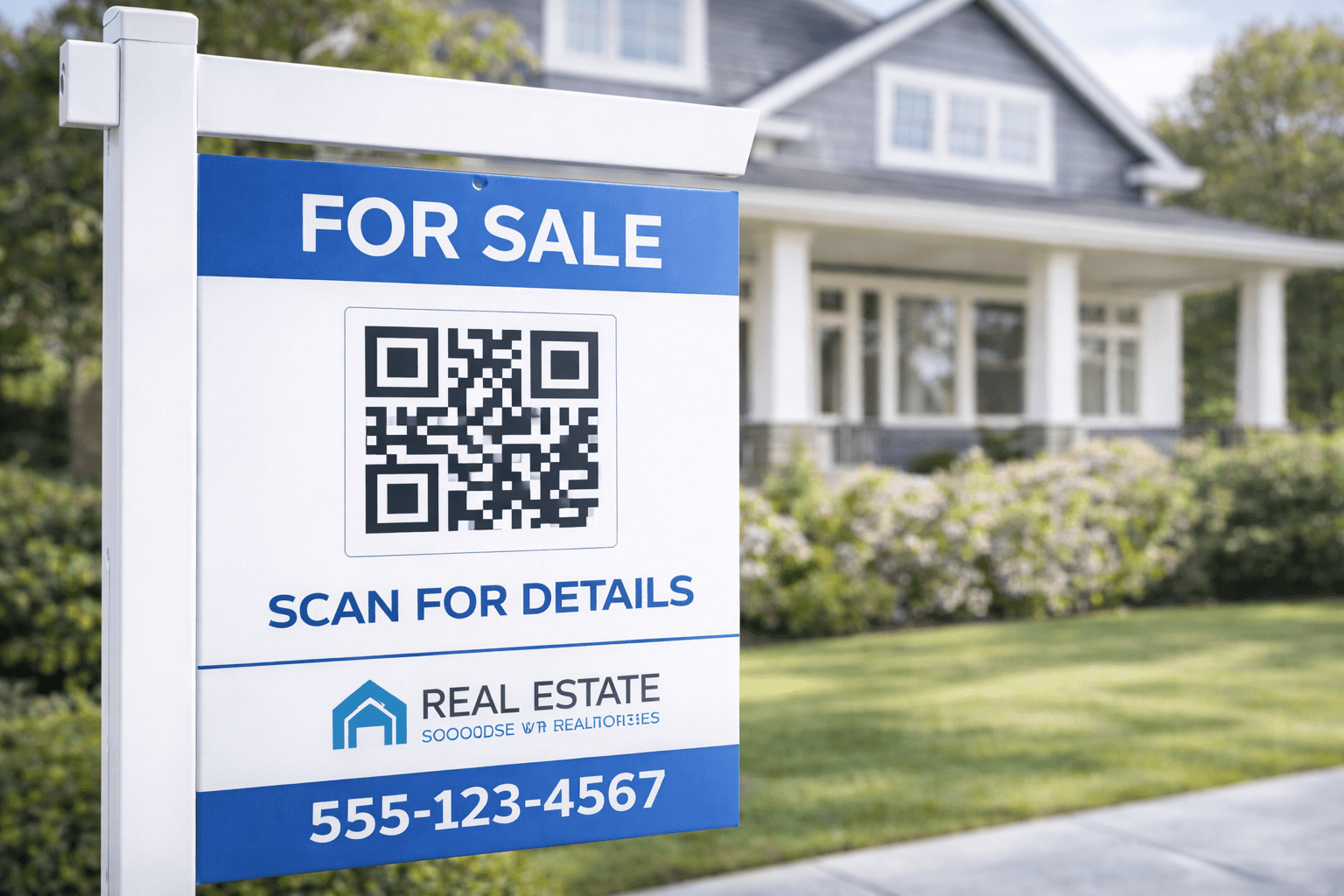
The most visible QR code opportunity:
What to link to: - Full listing page with all details - Virtual tour or video walkthrough - Photo gallery - Neighborhood information - Agent contact/scheduling
Design best practices: - Large code size (8-10cm minimum for street visibility) - High contrast against sign background - Clear call-to-action: "Scan for Photos & Tour" - Weatherproof printing (UV-resistant, laminated)
Placement tips: - Eye level for pedestrians - Visible from sidewalk and slow-moving cars - Not obscured by landscaping - Protected from sprinklers/weather
Dynamic code advantage: When the listing sells, update the code to your agent website or other listings—no sign replacement needed.
Pro Tip
Include your phone number below the QR code as backup. Not everyone will scan, but seeing the QR shows you're tech-forward.
Virtual Tours and Walkthroughs
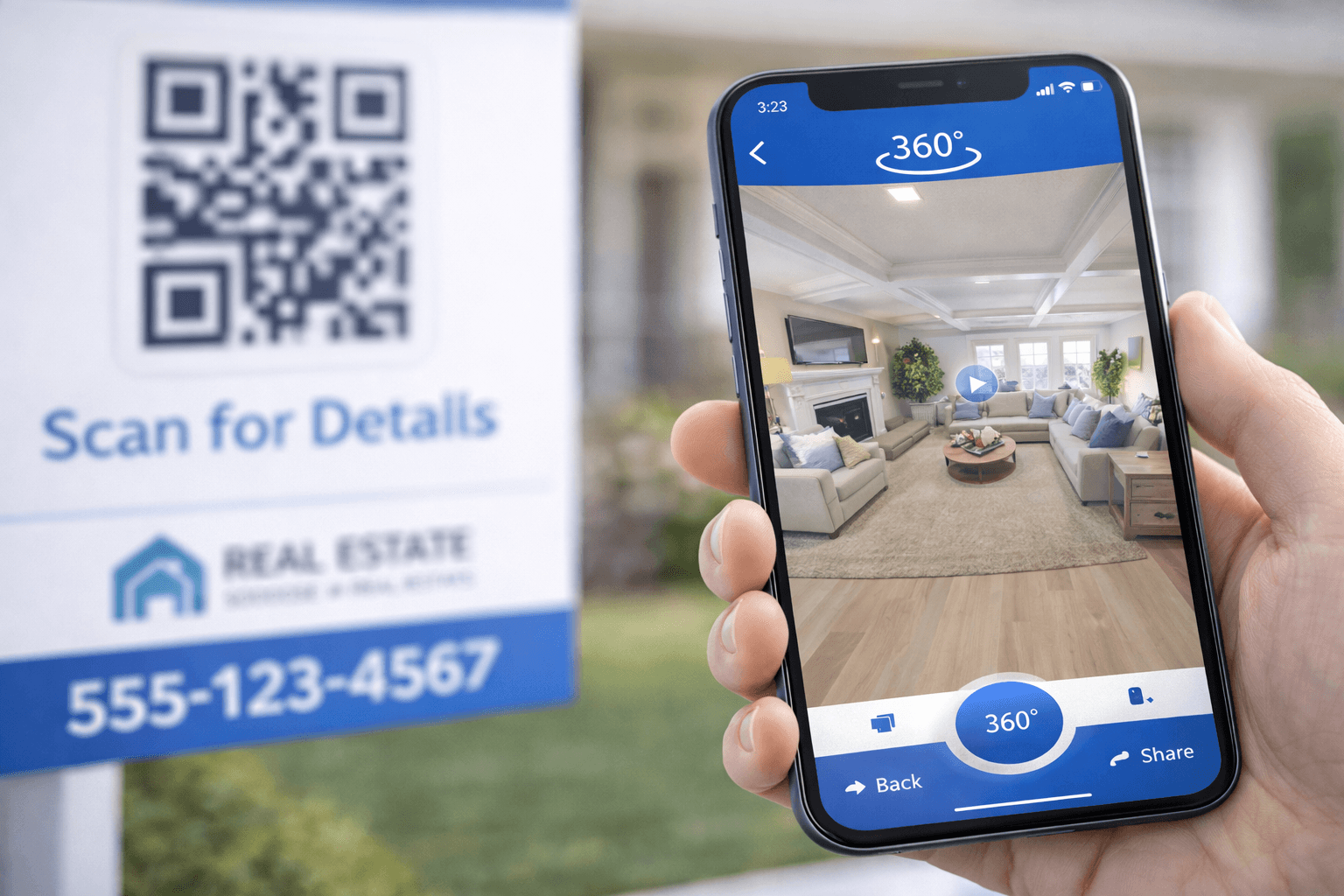
Let buyers explore remotely:
Virtual tour types: - 360-degree interactive tours (Matterport, etc.) - Video walkthroughs with agent narration - Photo slideshows with descriptions - Live virtual showing scheduling
Where to place tour QR codes: - Yard signs (for remote browsing) - Open house materials (for post-visit review) - Print advertisements - Mailers and flyers - Social media (screenshot-to-scan)
Enhancing the experience: - Mobile-optimized viewing - VR headset compatibility - Ability to measure rooms virtually - Hot spots linking to feature details
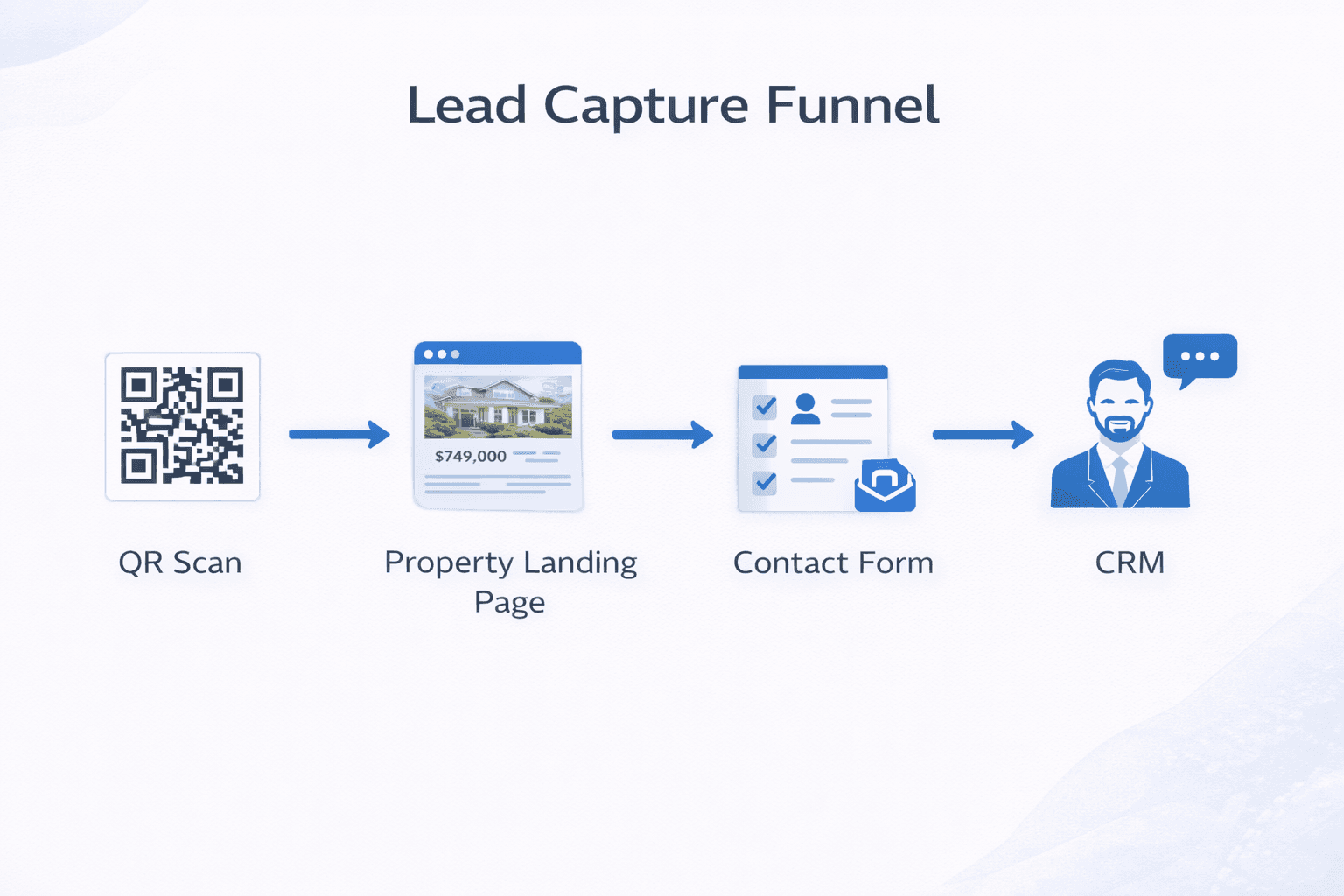
Example flow: 1. Buyer sees yard sign 2. Scans QR code 3. Lands on virtual tour 4. Explores property in detail 5. Clicks to schedule showing or contact agent
Open House Enhancement
Make open houses more productive:
Entry/sign-in: - QR code for digital sign-in (capture lead info) - Faster than paper sign-in sheets - Automatic follow-up email trigger - Better data accuracy
Throughout the property: - Room-specific information cards - Feature highlight details - Recent upgrades/renovations - HOA/community information
Take-home materials: - QR codes on flyers link to full listing - Agent contact information - Similar available properties - Mortgage calculator
Post-visit: - Thank you email with property recap - Additional photos not seen at open house - Neighborhood amenities information - Request for feedback
- Replace paper sign-in with QR code registration
- Place feature cards with QR codes on unique selling points
- Provide QR-enabled take-home flyers
- Send automated follow-up within 24 hours
- Track which features generate most interest via scan analytics
Print Marketing Integration
Enhance traditional marketing materials:
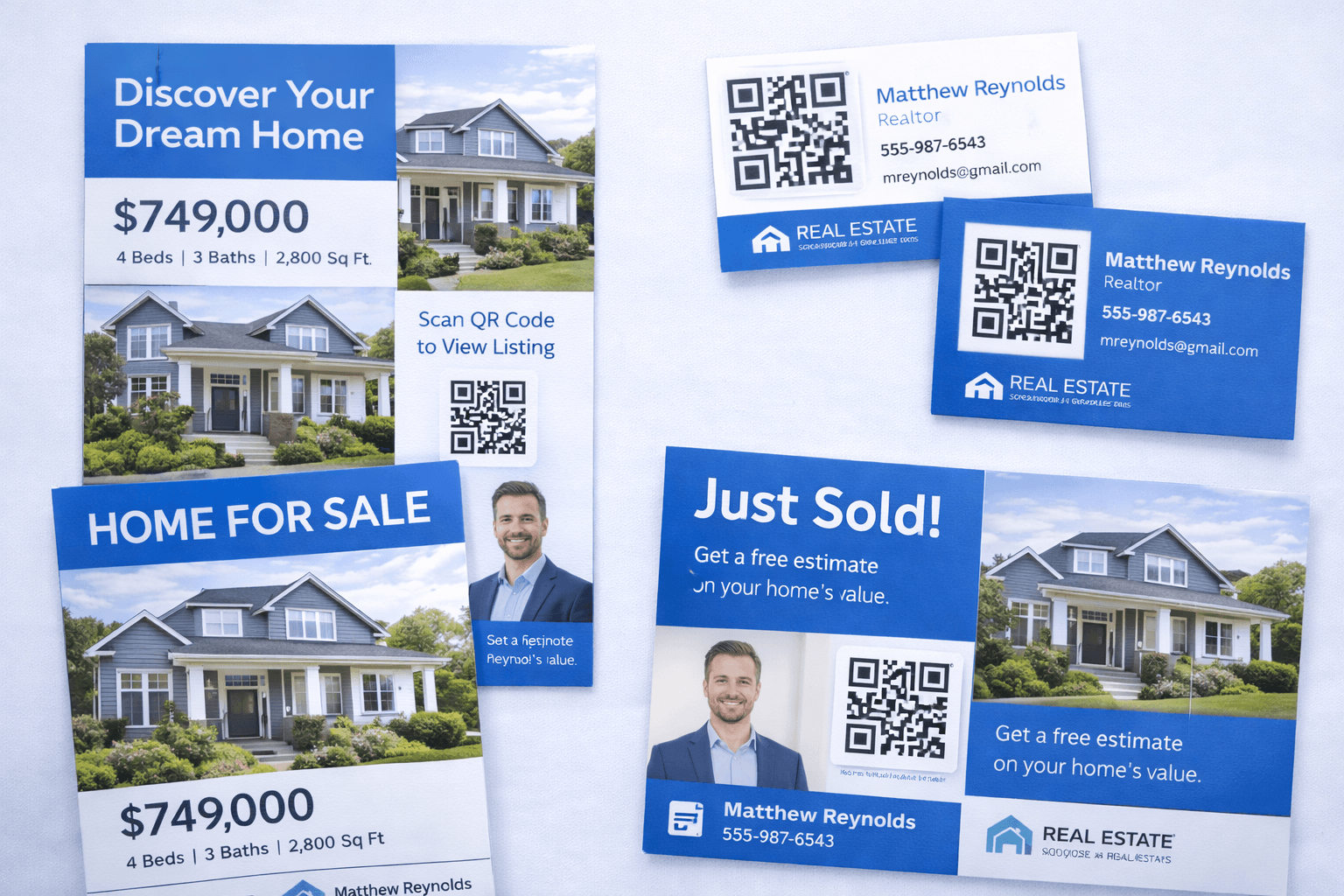
Business cards: - vCard QR for instant contact saving - Link to agent website/portfolio - Current listings showcase
Brochures and flyers: - Individual listing QR codes - Multiple properties in one piece - Neighborhood information links - Market reports and analysis
Direct mail: - "Just Listed" cards with property QR - Market update with relevant listings - Neighborhood farming pieces - Event invitations
Magazine/newspaper ads: - Limited print space expanded digitally - Track ad effectiveness via scan analytics - Same ad, multiple publications, unique codes for tracking
Best practice: Always use unique codes for different placements. "Magazine A" and "Magazine B" should have different codes linking to the same content, enabling performance comparison.
Lead Generation and Follow-Up
Convert scans into clients:
Lead capture: - Require basic info to access full listing details - Offer value exchange (market report for email) - Track interest level via content engagement - Score leads based on behavior
Nurture sequences: - Automated email series after scan - Property alerts matching criteria - Market updates and insights - Agent introduction and expertise showcase
CRM integration: - Sync scan data with contact management - Track touch points across channels - Assign leads to appropriate follow-up - Measure scan-to-client conversion
Follow-up timing: Studies show 78% of real estate deals go to the first agent who responds. QR code scans can trigger instant notifications for rapid response.
Pro Tip
Set up mobile notifications for QR scans. When someone scans your yard sign, you could call them within minutes—while they're still looking at the property.
Tracking and Analytics
Measure marketing effectiveness:
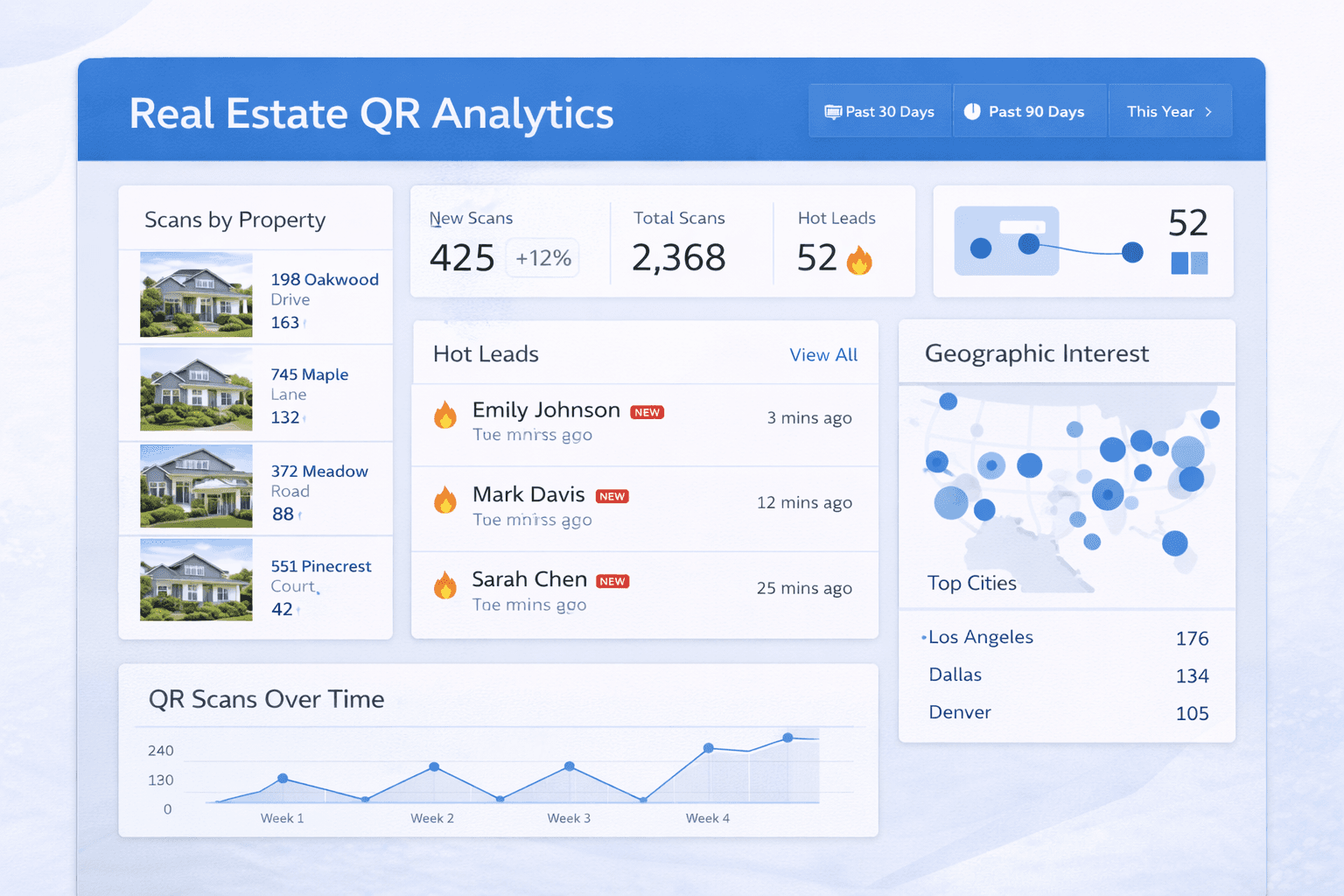
Property-level insights: - Which listings generate most scan interest - Time of day people view properties - Geographic origin of viewers - Device types (indicates demographics)
Marketing channel comparison: - Yard sign vs. flyer vs. digital ad performance - Best performing publications - Most effective placements - ROI by marketing spend
Optimization opportunities: - Double down on high-performing channels - Adjust pricing strategy based on interest - Identify hot neighborhoods by scan patterns - Time open houses to peak interest periods
Reporting value: Sellers appreciate data. Show them "Your listing received 47 QR scans this week, with peak interest on Saturday afternoon."
Implementation Checklist
Get started with this checklist:
Foundation: - [ ] Choose QR code platform with analytics - [ ] Set up landing page templates - [ ] Establish code naming convention - [ ] Create tracking spreadsheet
For each listing: - [ ] Generate unique dynamic QR code - [ ] Create mobile-optimized landing page - [ ] Prepare virtual tour/video content - [ ] Design yard sign with QR code - [ ] Create print materials - [ ] Set up lead capture forms - [ ] Configure follow-up automation
Ongoing maintenance: - [ ] Update listing status when changed - [ ] Redirect sold listings to agent site - [ ] Review analytics weekly - [ ] Optimize based on performance data
Pro tips: - Always use dynamic codes (update without reprinting) - Test codes before deployment - Monitor for any technical issues - Respond quickly to scan-generated leads
Important
When a property sells, don't delete the QR code. Redirect it to your website or similar listings. Those codes may still be on print materials or cached images.
Conclusion
QR codes give real estate professionals a powerful tool to bridge physical and digital marketing. They capture drive-by interest, deliver virtual tours, enhance open houses, and feed lead generation systems.
Start with yard signs—the highest-impact opportunity. Then expand to print materials, open house enhancements, and comprehensive tracking. The data you gather will help you market more effectively and demonstrate value to sellers.
In a competitive market, modern marketing tools differentiate successful agents. QR codes are now expected, not exceptional—make sure you're using them.
Ready to Create Your Own QR Codes?
Start creating dynamic QR codes for your business today. Track analytics, update content anytime, and never reprint again.
Related Articles
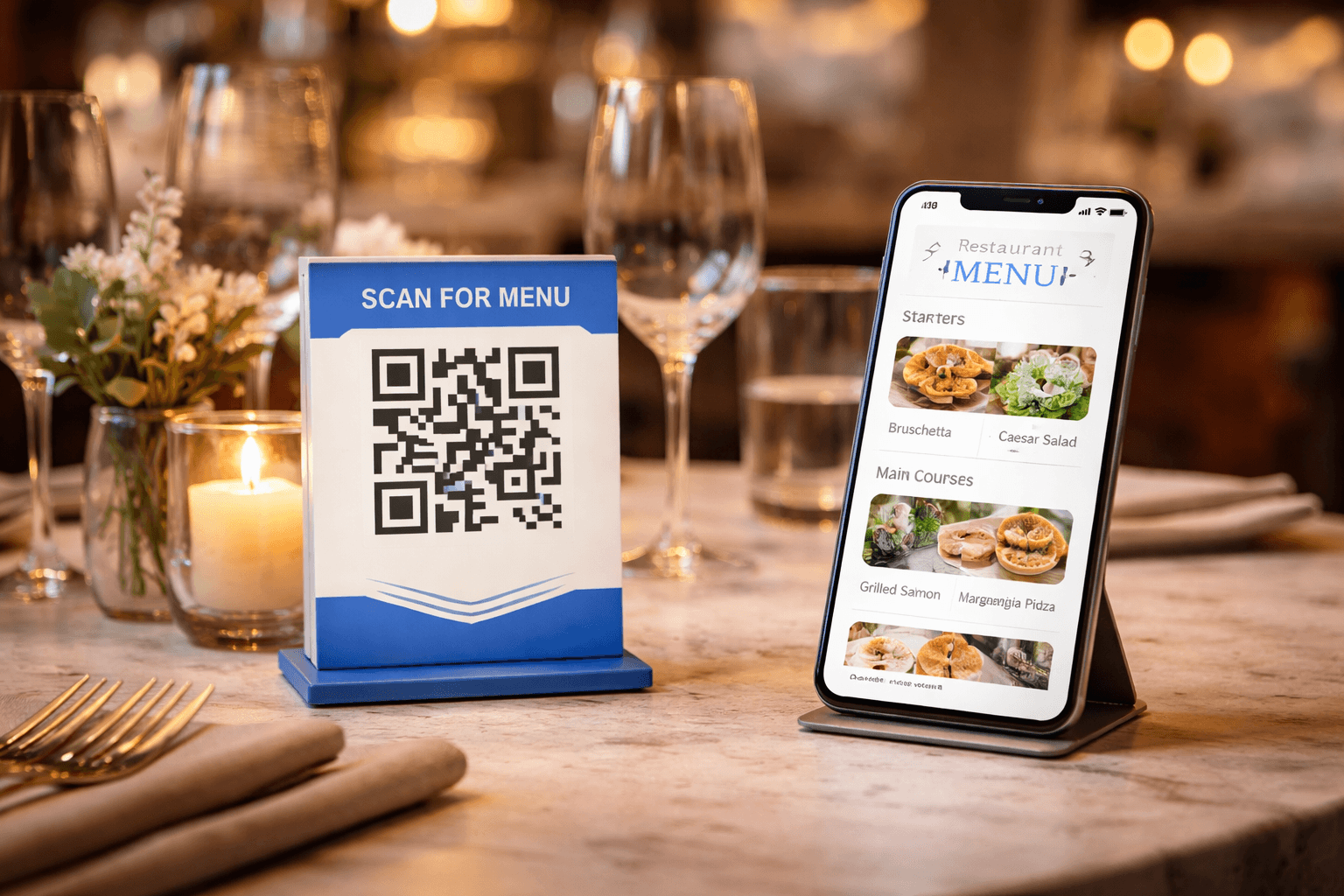
QR Code Menus for Restaurants: The Complete Setup Guide
Step-by-step guide to implementing QR code menus in your restaurant. Covers menu design, placement, customer experience, and common mistakes to avoid.
QR Codes for Events: Conferences, Trade Shows, and Beyond
Comprehensive guide to using QR codes at events. Cover check-in, networking, exhibitor engagement, and post-event follow-up.
QR Codes on Product Packaging: Engaging Consumers Beyond the Shelf
Transform product packaging into an interactive experience. Learn strategies for using QR codes to provide information, build loyalty, and drive engagement.