Dynamic vs Static QR Codes: Which One Should You Use?
Understand the key differences between dynamic and static QR codes, their pros and cons, and learn which type is best for your specific use case.

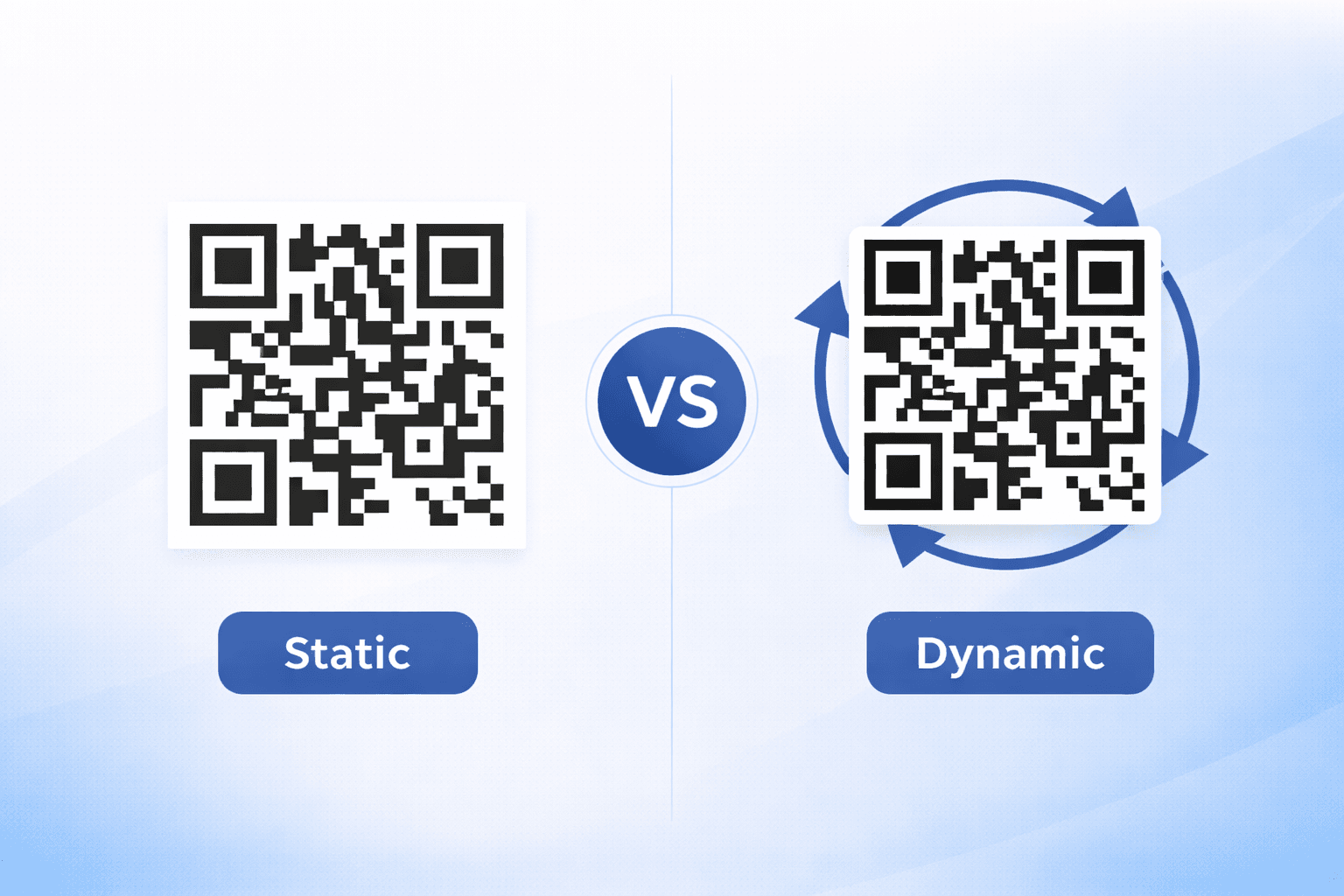
If you've started researching QR codes, you've likely encountered the terms "dynamic" and "static." Understanding the difference between these two types is crucial—it can mean the difference between a flexible, trackable marketing tool and a one-time, unchangeable code that may become useless the moment you need to update something.
In this guide, we'll break down exactly what each type offers, when to use them, and help you make the right choice for your specific needs.
What is a Static QR Code?
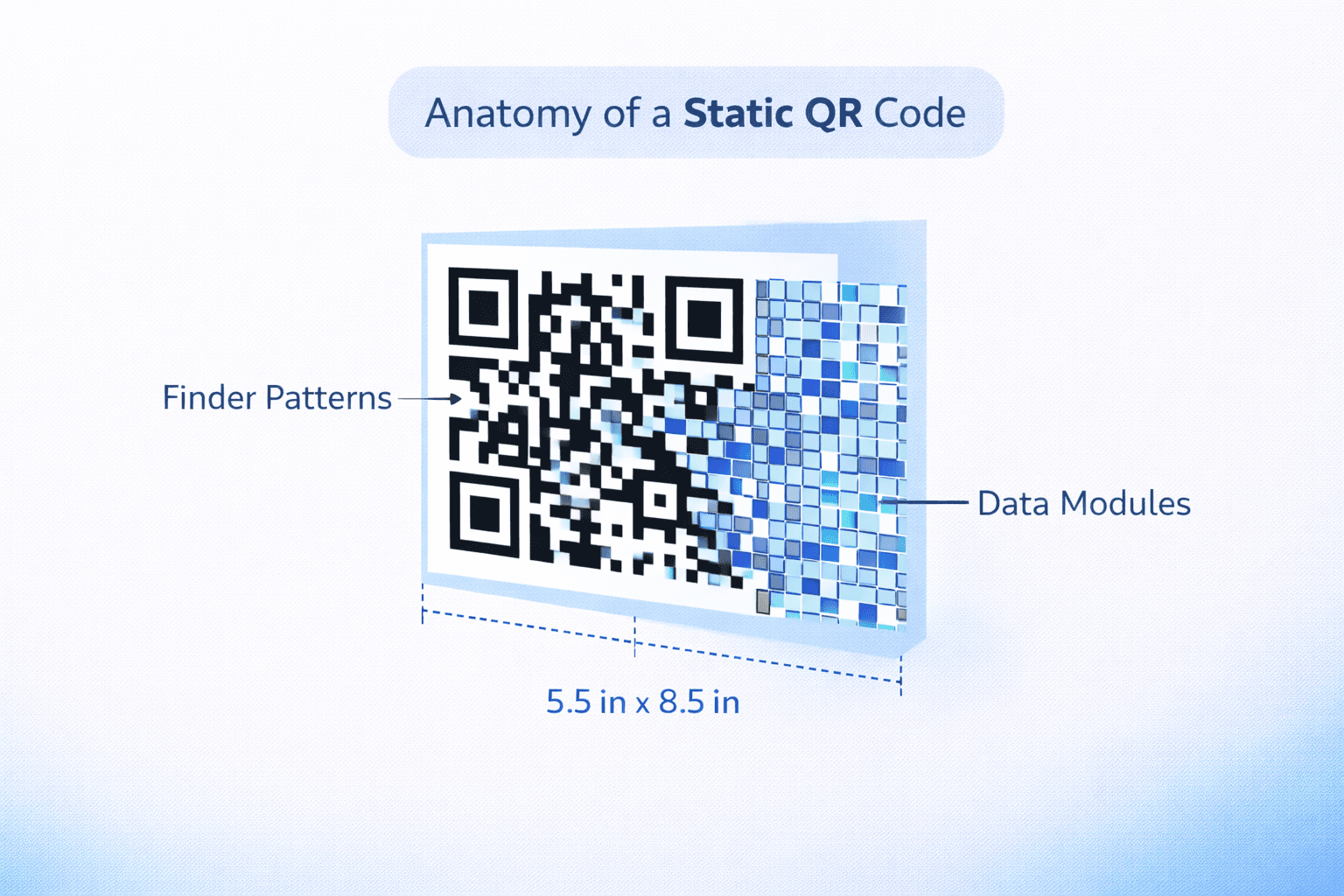
A static QR code directly encodes your destination data (URL, text, contact info) into the code pattern itself. Once generated, the information is permanently "baked in" and cannot be changed.
How it works: When you create a static QR code for "https://example.com/page," that exact URL becomes part of the QR code's physical pattern. Every black and white module represents data that, when scanned, reconstructs the original URL.
Key characteristics: - Data is encoded directly in the code - Cannot be edited after creation - Works offline (no internet required to decode) - No scanning analytics available - Free to generate on most platforms - More data = larger, denser code pattern
What is a Dynamic QR Code?
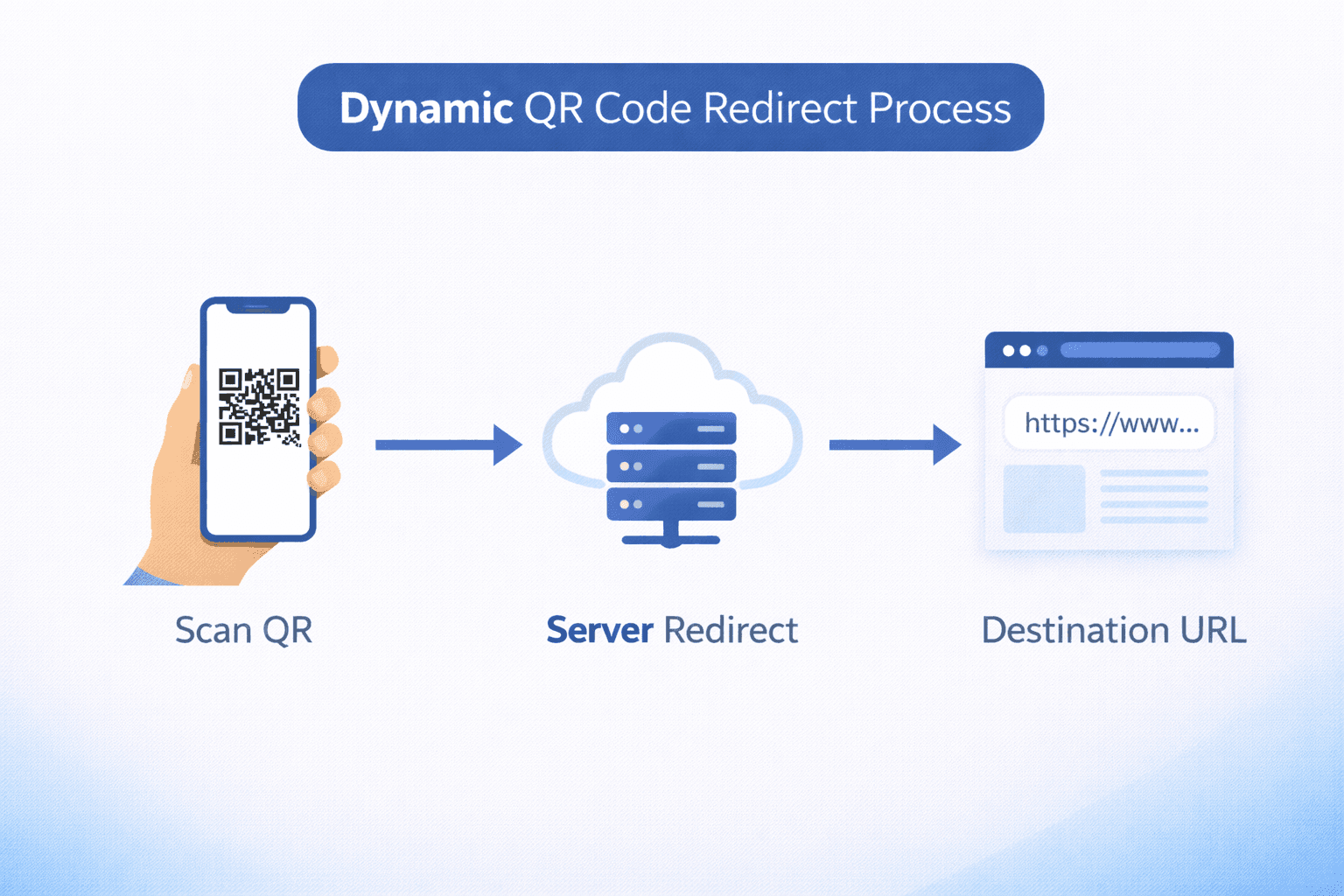
A dynamic QR code contains a short redirect URL that points to a server, which then forwards users to your actual destination. This intermediary step enables powerful features like editing and tracking.
How it works: Instead of encoding "https://example.com/my-very-long-page-url," a dynamic code encodes something like "https://qr.service/abc123." When scanned, users hit the redirect server, which forwards them to your destination. You can change that destination anytime through a dashboard.
Key characteristics: - Encodes a short redirect URL - Destination can be changed unlimited times - Provides detailed scan analytics - Requires internet for the redirect to work - Typically requires a subscription service - Always produces a compact, easily scannable code
Side-by-Side Comparison
Here's a comprehensive comparison of both types:
| Feature | Static QR Code | Dynamic QR Code |
|---|---|---|
| Editable after printing | No | Yes |
| Scan tracking/analytics | No | Yes |
| Code size/density | Varies with data | Always compact |
| Internet required | No | Yes (for redirect) |
| Cost | Usually free | Subscription-based |
| Best for | Permanent info, offline use | Marketing, changeable content |
| Lifespan | Permanent | Depends on service |
| Data capacity usage | Full capacity | Minimal |
Pro Tip
If you are printing QR codes on permanent materials (signage, product packaging, merchandise), dynamic codes are almost always the better choice—they give you the flexibility to fix mistakes or update content without reprinting.
When to Use Static QR Codes
Static QR codes have their place despite their limitations. Choose static when:
Ideal use cases: 1. WiFi network sharing: The credentials rarely change, and offline functionality is helpful 2. Personal vCards: For individuals who won't need detailed analytics 3. Internal documents: Company documents where tracking isn't needed 4. One-time events: Single-use codes where editing isn't necessary 5. Offline environments: Situations where internet connectivity isn't reliable 6. Cost-sensitive projects: When you need many codes but have zero budget
Example scenario: A small coffee shop wants to share their WiFi password. The password hasn't changed in years, they don't need to track scans, and they want the code to work even if their internet is down. A static WiFi QR code is perfect here.

When to Use Dynamic QR Codes
Dynamic QR codes are the professional choice for most business applications. Choose dynamic when:
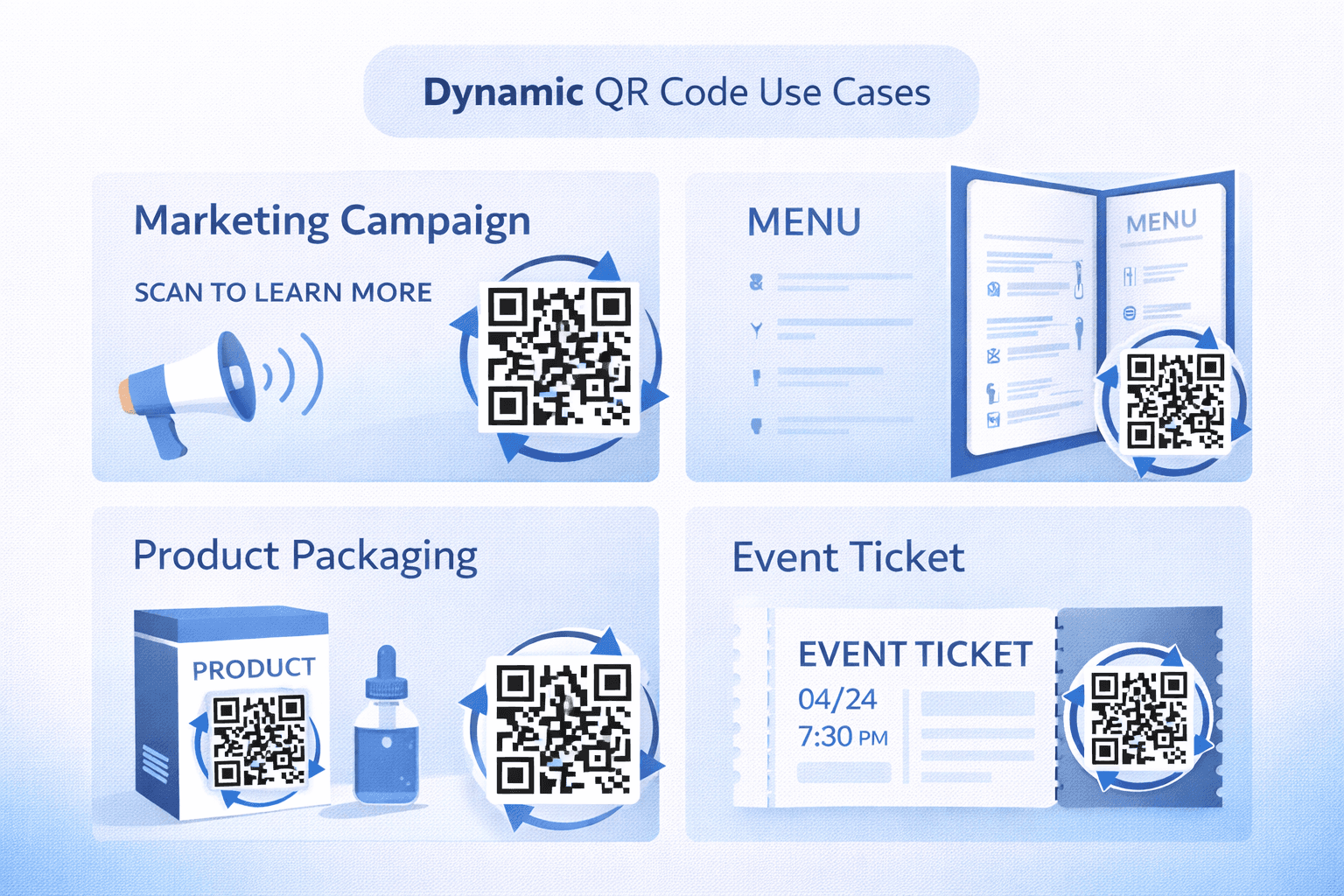
Ideal use cases: 1. Marketing campaigns: Track ROI, A/B test destinations, adjust messaging 2. Product packaging: Update recall information, change promotional links 3. Restaurant menus: Adjust prices, add seasonal items without reprinting 4. Real estate: Update listing status, change virtual tour links 5. Business cards: Update your contact info or portfolio link 6. Event materials: Redirect to post-event surveys or updated schedules
Example scenario: A restaurant prints table tent cards with QR codes linking to their menu. With dynamic codes, they can update prices daily, add seasonal specials, and see which tables have the most engaged customers—all without printing new cards.
The Analytics Advantage
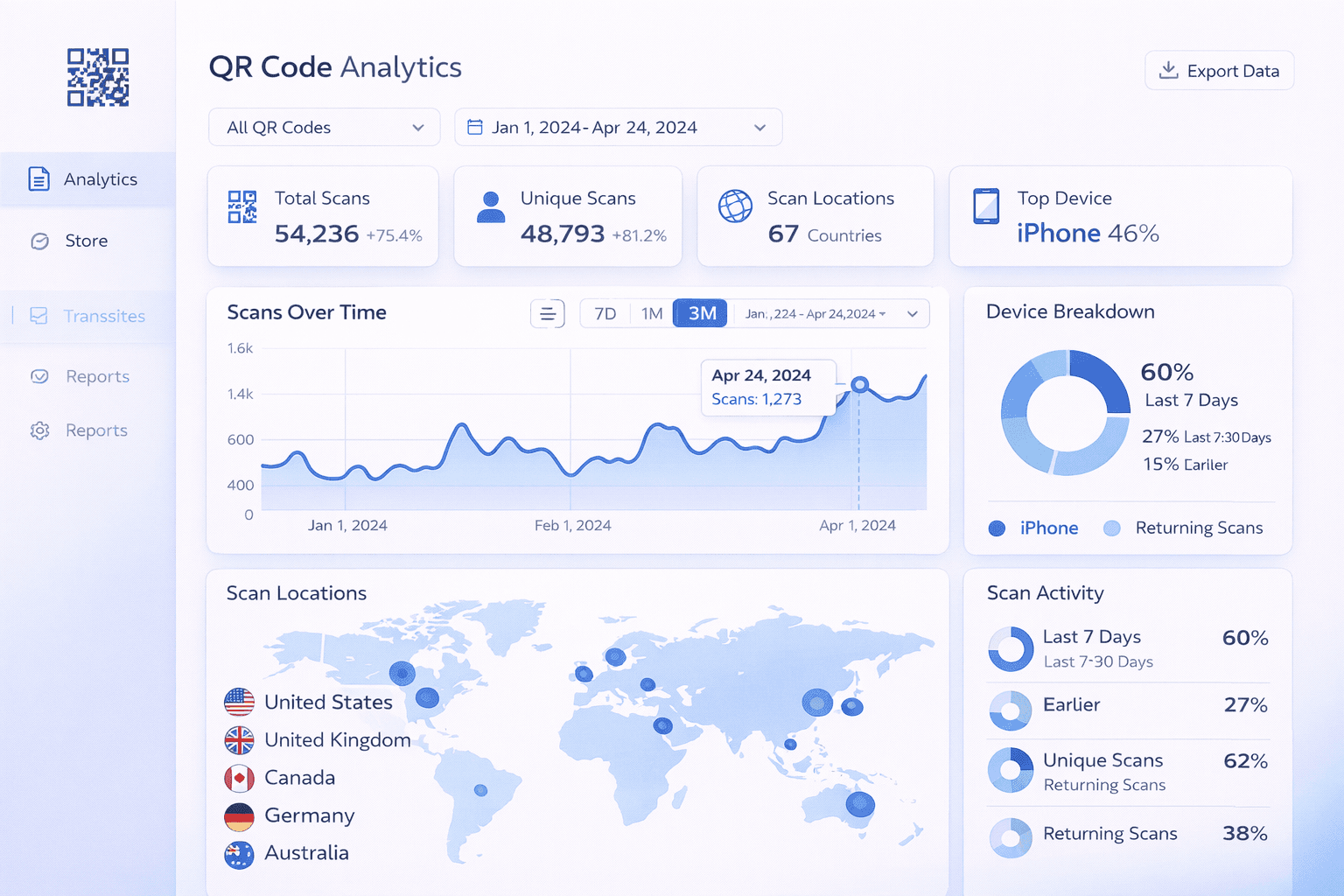
One of the most valuable features of dynamic QR codes is analytics. Understanding how people interact with your codes provides actionable business insights.
What you can track: - Total scans: Overall engagement measurement - Unique vs. repeat scans: User behavior patterns - Scan location: City, region, country data - Device type: iOS vs. Android breakdown - Scan time: Peak engagement hours and days - Browser/OS: Technical user information
Why analytics matter: Imagine you place QR codes on posters in 10 different subway stations. Analytics reveal that Station A generates 500 scans per week while Station B generates only 20. You now know to invest more in Station A's location and investigate why Station B underperforms.
Pro Tip
Combine QR code analytics with UTM parameters for even deeper insights. Track the full user journey from scan to conversion in Google Analytics.
The Editing Superpower
The ability to edit dynamic QR codes is a game-changer that can save thousands in reprinting costs.
Real-world editing scenarios:
Mistake correction: You printed 10,000 flyers but the URL has a typo. With dynamic codes, fix it in 30 seconds. With static, you're reprinting everything.
Campaign pivoting: Your promotion ended but the codes are still on packaging. Update them to point to your main site instead of a dead campaign page.
A/B testing: Run the same physical code but change the destination weekly to test which landing page converts better.
Seasonal updates: Holiday promotion ends? Redirect to your everyday offering without any physical changes.
Content freshness: Link to your "latest blog post" and update the destination each time you publish.
Important
The editing feature only works as long as your QR code service provider exists. Choose a reliable provider with a strong business model to avoid codes breaking if the service shuts down.
Cost Considerations
Let's talk realistically about costs:
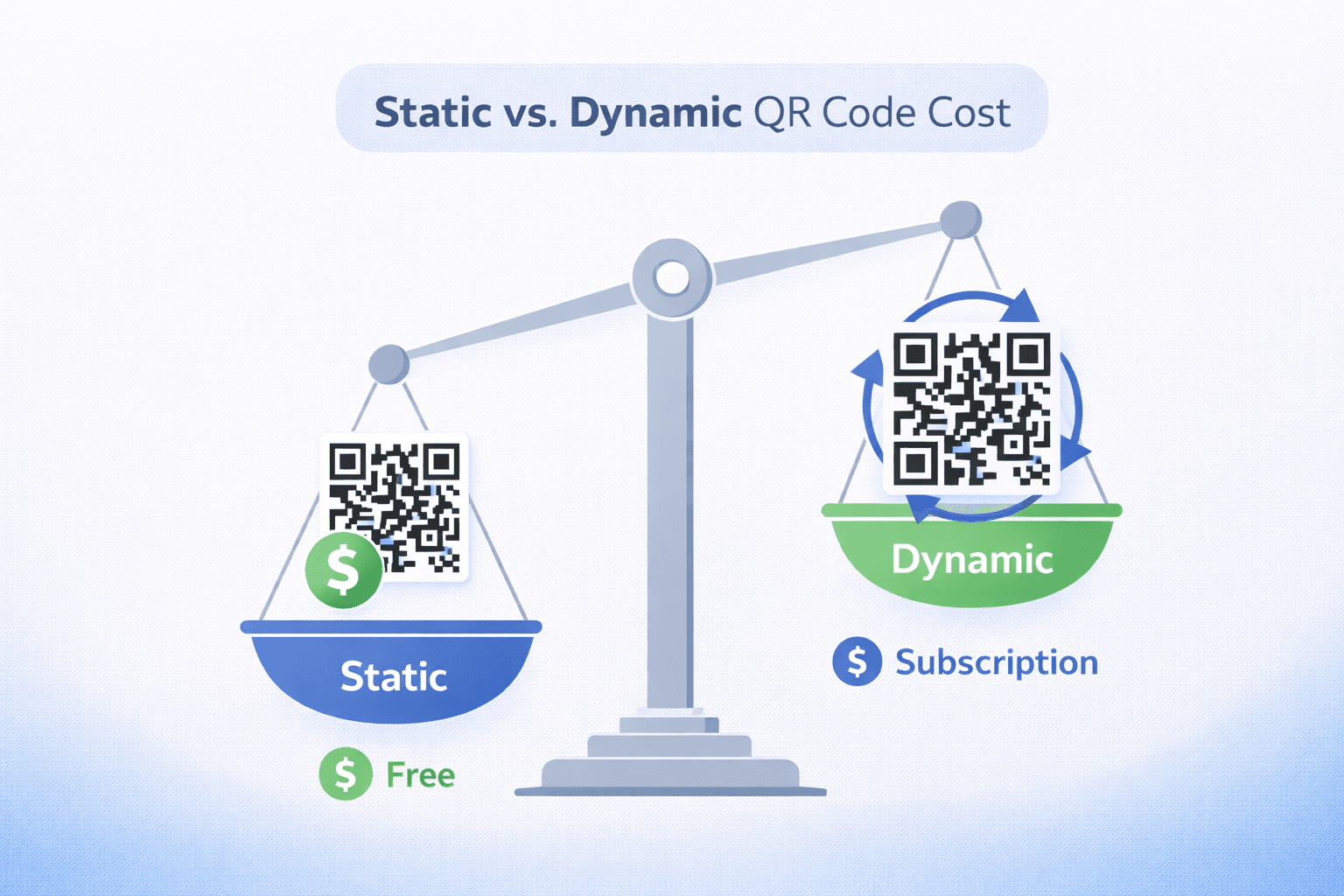
Static QR codes: - Generation: Free on most platforms - Ongoing cost: $0 - Hidden cost: Reprinting if anything changes
Dynamic QR codes: - Generation: Usually requires subscription - Ongoing cost: $5-50/month depending on features - Value: Flexibility and analytics
ROI calculation example: You print 5,000 brochures at $0.50 each = $2,500 printing cost. You later need to change the destination URL.
- With static: Reprint cost = $2,500
- With dynamic: $0 (just edit in dashboard)
One prevented reprint typically pays for years of dynamic QR code service.
Making Your Decision
Use this decision framework:
Choose STATIC if: - [ ] The information will never change - [ ] You don't need scan analytics - [ ] Offline scanning capability is required - [ ] You have zero budget for QR tools - [ ] It's for personal, low-stakes use
Choose DYNAMIC if: - [ ] The content might need updates - [ ] You want to track scan performance - [ ] Multiple codes need management - [ ] It's for business/marketing use - [ ] Materials will be printed at scale
When in doubt, choose dynamic. The small investment provides insurance against the much larger cost of reprinting materials.
Conclusion
The choice between dynamic and static QR codes comes down to flexibility versus simplicity. Static codes work fine for permanent, personal use cases where tracking doesn't matter. Dynamic codes are the professional choice for any business application where you need analytics, editing capability, or simply want peace of mind knowing you can fix mistakes.
For most readers of this guide—people creating QR codes for business purposes—dynamic codes are the clear winner. The small monthly investment provides enormous value through analytics insights and the flexibility to adapt without reprinting.
Ready to Create Your Own QR Codes?
Start creating dynamic QR codes for your business today. Track analytics, update content anytime, and never reprint again.