The Future of QR Codes: Trends and Predictions for 2025 and Beyond
Explore emerging QR code trends including AR integration, AI personalization, payment evolution, and what the future holds for this technology.


QR codes have evolved from inventory tracking tools to ubiquitous digital bridges. But the technology continues to advance. Augmented reality integration, AI-powered personalization, expanded payment capabilities, and new form factors are reshaping what's possible.
This guide explores the trends defining the future of QR codes and what they mean for businesses and consumers.
Current State: The Foundation
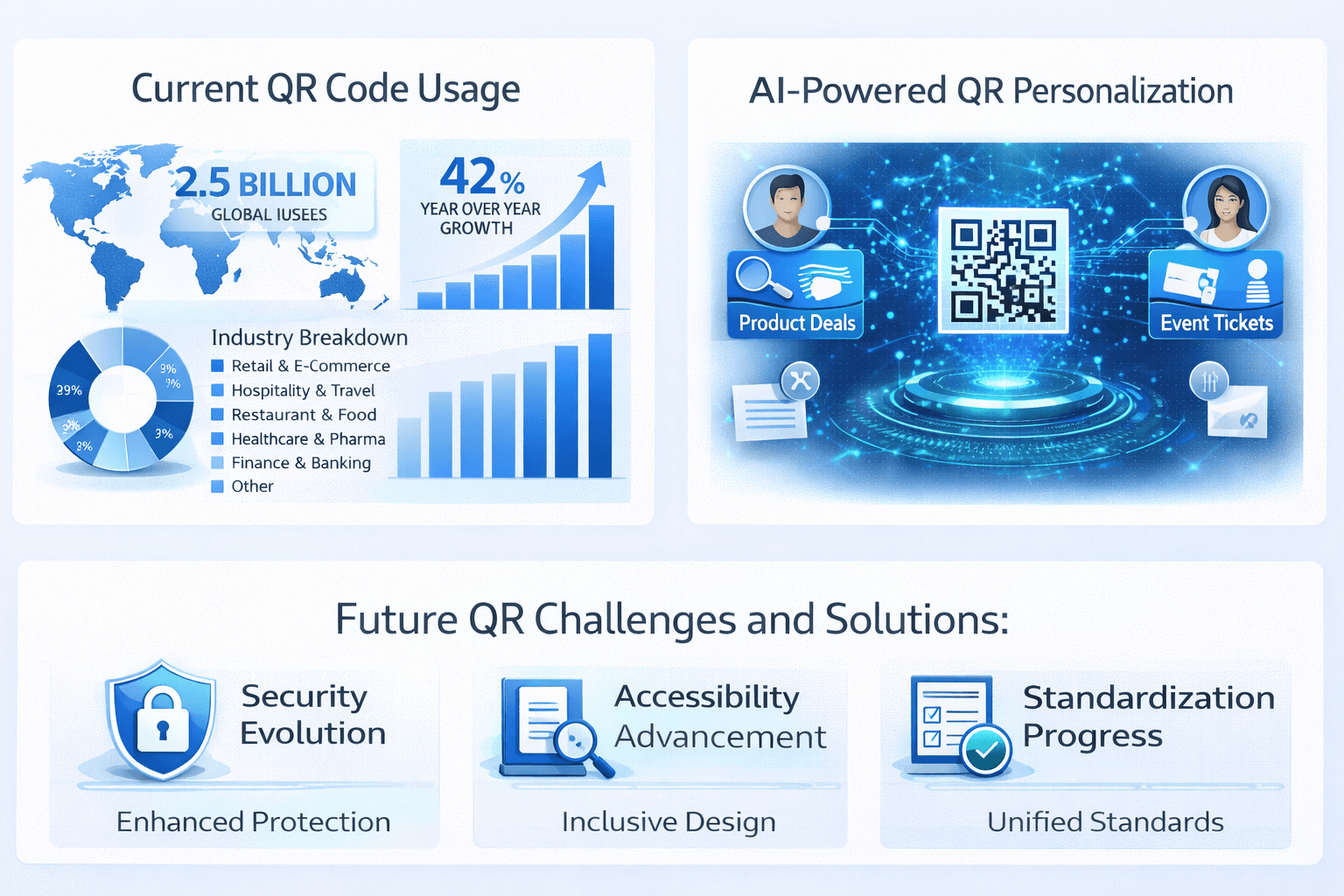
Understanding where we are today:
Market reality: - Global QR code market: $1.5 billion (2023), projected $3.5 billion by 2033 - Over 100 million US consumers scan QR codes - 59% of users scan QR codes daily - QR payment volume exceeded $4.5 trillion globally
Driving forces: - Smartphone ubiquity (camera as scanner) - Pandemic-accelerated adoption - Payment system integration - Consumer comfort level at all-time high
Current limitations: - Basic functionality (link to URL) - Limited personalization - Fragmented payment ecosystems - Static post-scan experiences
The foundation is strong. What's next builds on this base.
Trend 1: Augmented Reality Integration
QR codes as AR launchers:
Current applications: - Product visualization ("see this furniture in your room") - Try-before-buy experiences (cosmetics, eyewear) - Interactive games and entertainment - Educational overlays on museum exhibits
Emerging developments: - Improved AR frameworks (Apple ARKit, Google ARCore) - WebAR reducing app dependency - More sophisticated 3D content - Real-time AR interactions
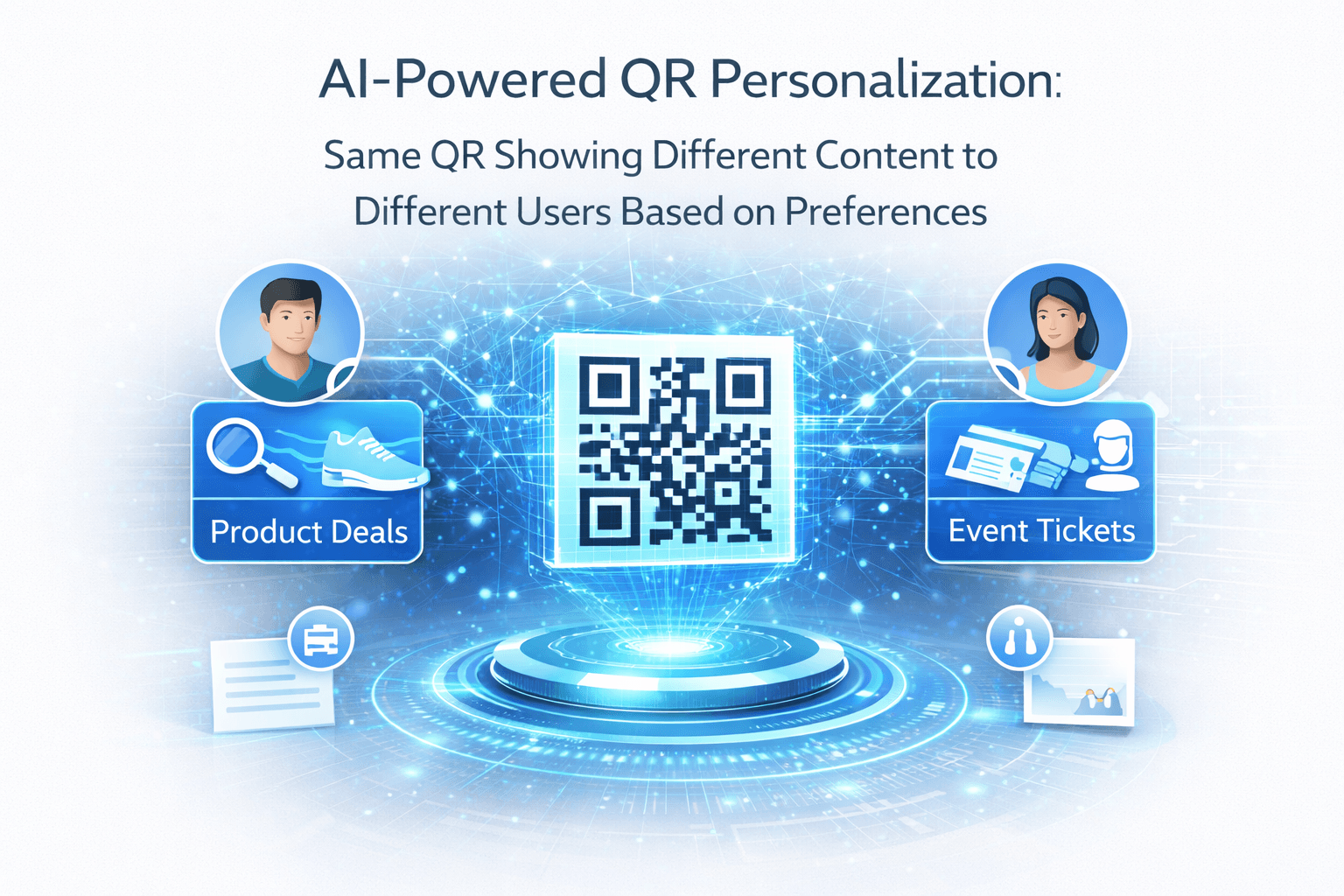
Example evolution: 2020: Scan QR → Link to product page 2025: Scan QR → See product in your space → Customize color → Add to cart → AR checkout
Business implications: - Higher engagement rates - Reduced return rates (see before buying) - Premium experience differentiation - New content investment requirements
Trend 2: AI-Powered Personalization
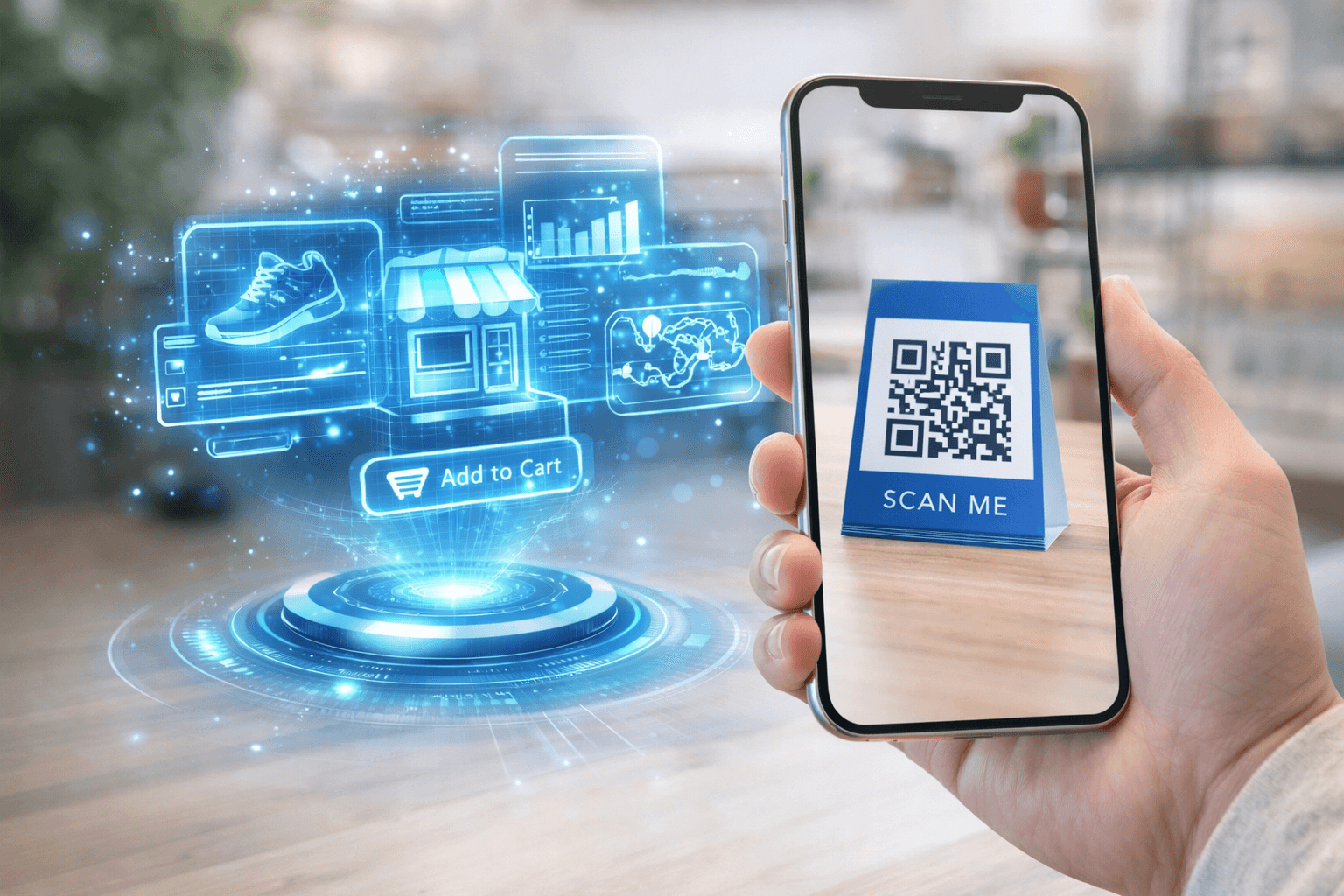
Intelligent, contextual QR experiences:
Personalization dimensions: - User-based: Different content for returning vs. new scanners - Context-based: Time of day, location, weather - Behavior-based: Based on previous interactions - Predictive: Anticipating user needs
Technical enablers: - Server-side decision making at scan - Integration with CRM and customer data platforms - Real-time content assembly - Machine learning optimization
Example scenarios: *Retail:* Same QR code shows loyalty members their points balance, new visitors a signup offer, and VIPs an exclusive preview.
*Restaurant:* Menu QR highlights different items based on time of day, weather, and past ordering history.
Privacy considerations: As personalization increases, so do privacy concerns. Transparent data practices and opt-in approaches will be essential.
Trend 3: Payment Evolution
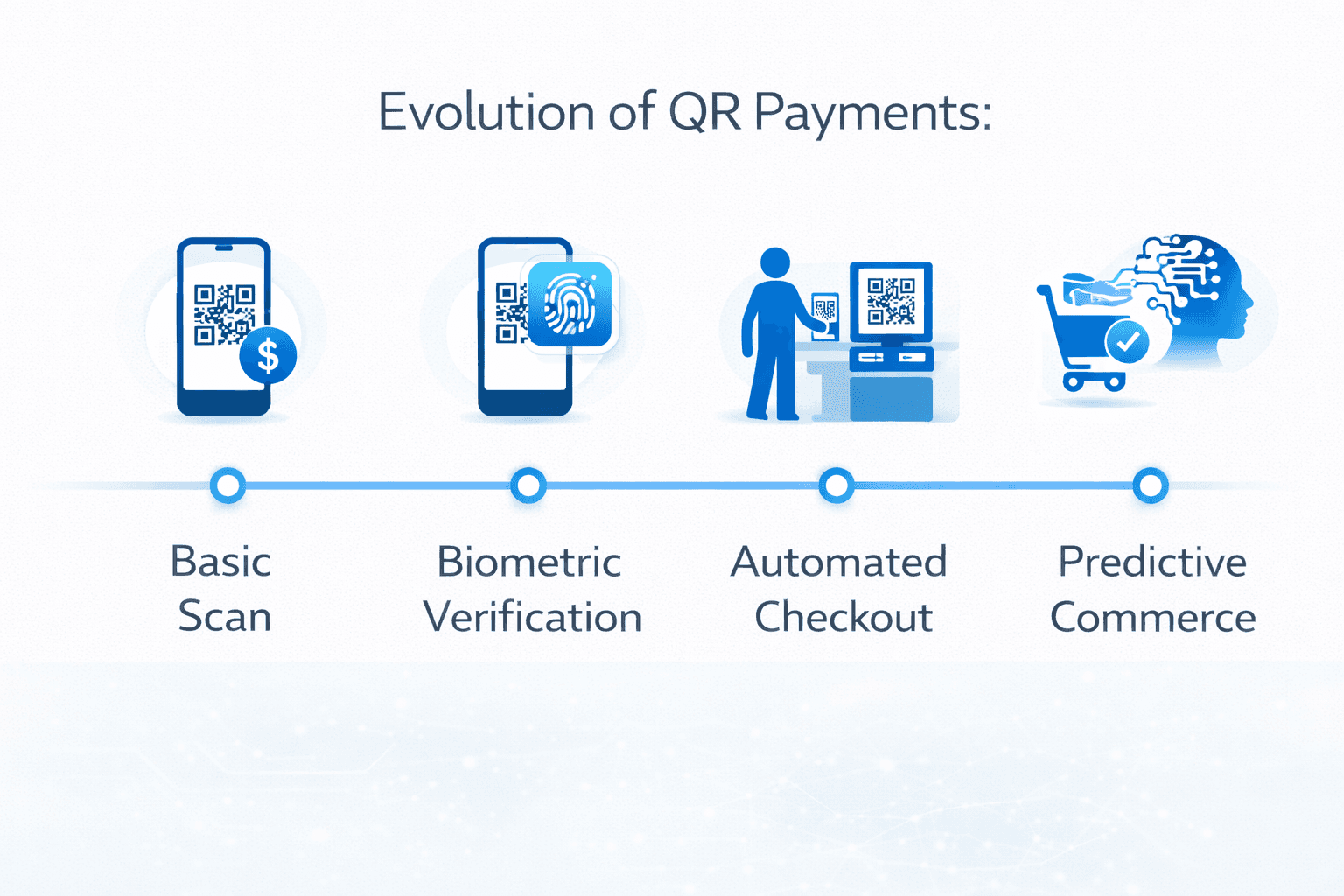
The expanding payment landscape:
Current state: - Strong in Asia (WeChat Pay, Alipay dominant) - Growing in emerging markets (India's UPI, Brazil's Pix) - Slower but accelerating in West
Future developments:
Cross-border interoperability: Singapore-Thailand QR payment links are a model. Expect more regional and global connections enabling travel payment simplification.
Super-app expansion: Apps combining payments, messaging, shopping, and services (like WeChat) will expand beyond Asia.
CBDC integration: Central Bank Digital Currencies may use QR codes as primary interface, potentially transforming how we think about digital payments.
Merchant simplification: Single QR codes accepting any payment app/method, reducing merchant complexity.
Business impact: Lower payment processing costs, expanded customer reach, reduced hardware requirements.
Trend 4: Enhanced Security Features
Addressing growing security concerns:
Emerging security approaches:
Dynamic/time-limited codes: QR codes that expire after set time or single use, preventing replay attacks.
Encrypted payloads: Data within QR code encrypted, readable only by authorized apps.
Blockchain verification: Distributed ledger confirmation of QR code authenticity for high-value items.
Biometric confirmation: Scan + face/fingerprint to authorize sensitive actions.
Anti-counterfeiting innovations: - Micro-printing within QR elements - Color-shifting inks - Layered security features - Digital-physical binding
Consumer protection: - Built-in URL preview - Reputation/safety scoring - Automatic threat detection - Seamless verification without friction
Important
As QR codes become more valuable (payments, identity), they become bigger targets. Security must evolve alongside capabilities.
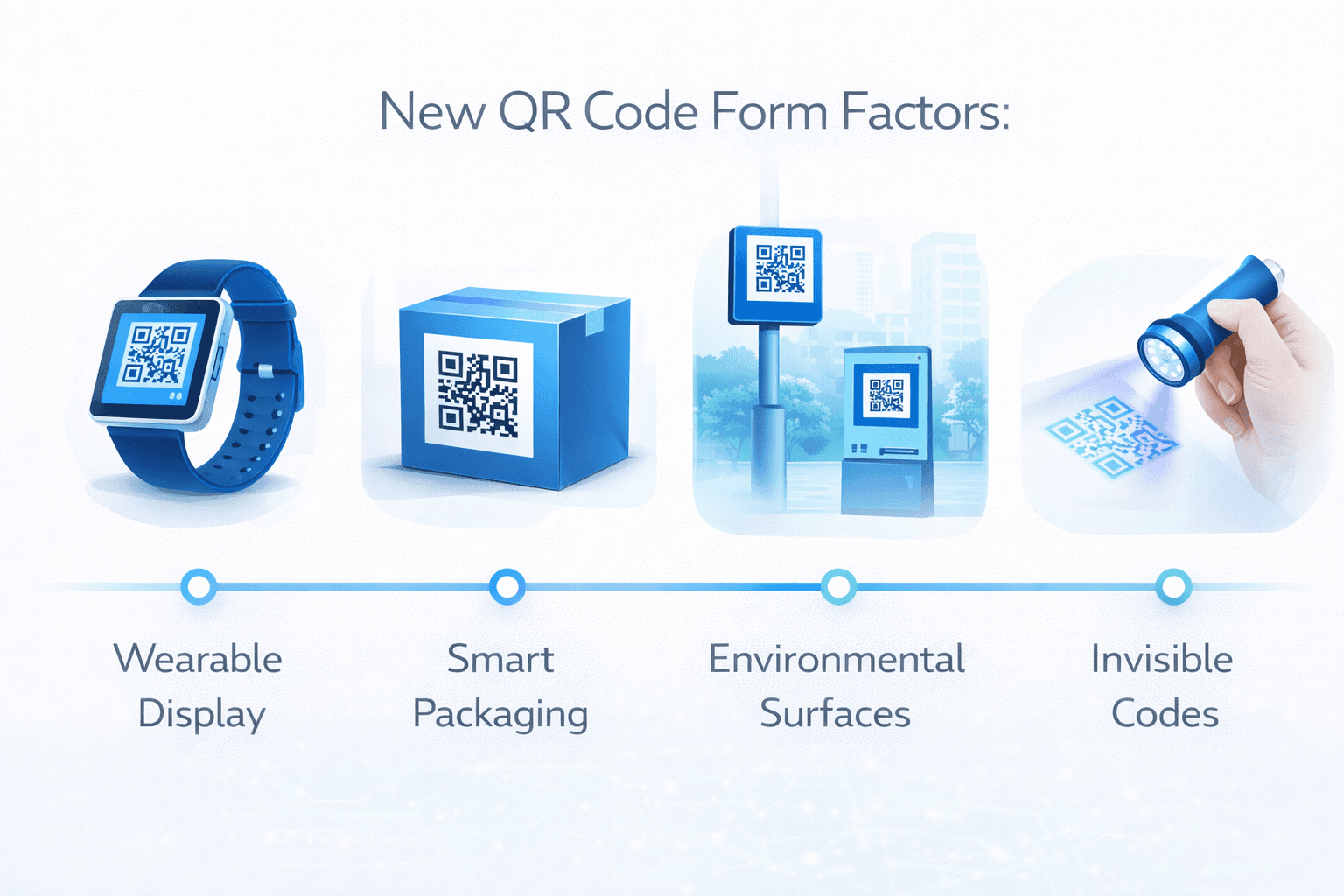
Trend 5: New Form Factors
Beyond the traditional square:
Invisible/embedded QR codes: - Printed in UV-reactive ink (invisible to eye, scannable) - Embedded in product textures - Integrated into artwork/design seamlessly - Audio QR codes (encoded in sound frequencies)
Wearable integration: - Smartwatch QR code display - AR glasses recognizing environmental QR codes - NFC + QR hybrid tags - Smart clothing with integrated codes
Dynamic physical displays: - E-ink QR codes that change - LED matrix QR displays - Projection-based codes - Screen-based adaptive codes
Biomimicry and design: Artistic QR codes that don't look like traditional codes but scan identically, enabling new creative applications.
Trend 6: Industry-Specific Evolution
Specialized applications emerging:
Healthcare: - Patient identification wristbands - Medication tracking and verification - Medical records access - Clinical trial enrollment
Supply chain: - End-to-end product tracking - Sustainability verification - Counterfeit prevention - Consumer transparency
Government/identity: - Digital ID verification - Secure document access - Voting and civic participation - Immigration and border control
Education: - Credential verification - Interactive textbooks - Campus-wide services - Research attribution
Entertainment: - Tickets and access control - In-venue experiences - Merchandise authentication - Fan engagement
- Healthcare: Patient safety and records access
- Supply chain: Transparency and authenticity
- Government: Secure identity and services
- Education: Verification and engagement
- Entertainment: Access and experience enhancement
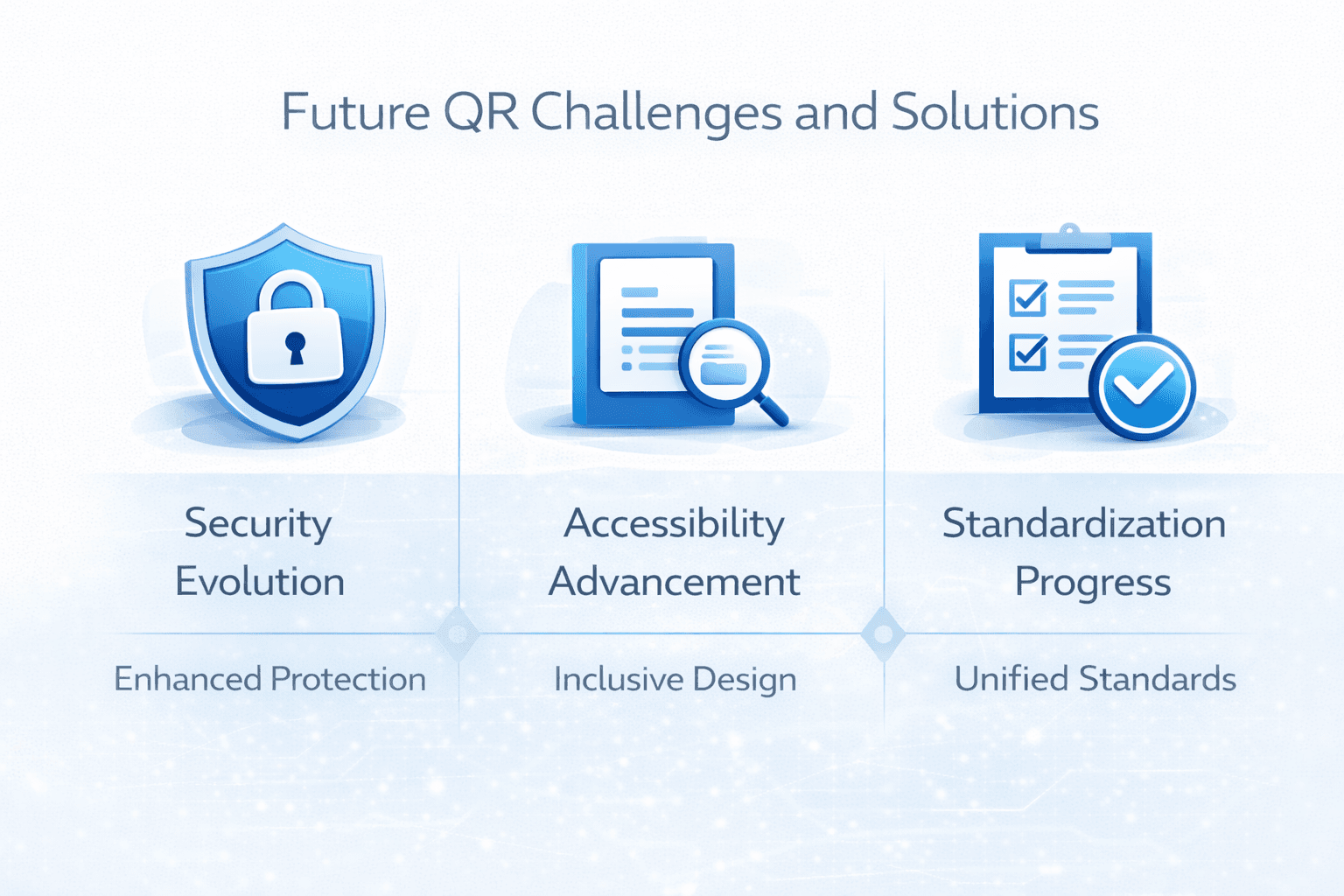
Challenges and Considerations
What could slow or complicate progress:
Technical challenges: - Device fragmentation (varying scanner capabilities) - Offline functionality limits - Battery/data consumption - Legacy system integration
Adoption barriers: - Digital divide (not everyone has smartphones) - Privacy concerns with tracking - Security threat evolution - User fatigue/skepticism
Regulatory landscape: - Data privacy regulations (GDPR, CCPA) - Payment regulations - Accessibility requirements - Industry-specific compliance
Competitive alternatives: - NFC technology - Bluetooth beacons - Visual search/recognition - Voice interfaces
The likely outcome: QR codes won't replace or be replaced by alternatives. They'll coexist, with QR codes maintaining advantages in cost, range, and data density.
Preparing for the Future
How to position for what's coming:
For businesses: - Invest in dynamic QR infrastructure now - Build mobile-first digital experiences - Develop personalization capabilities - Plan for AR integration where relevant - Stay current on payment ecosystem changes
For developers: - Learn AR development frameworks - Understand personalization architecture - Build secure, privacy-respecting systems - Create flexible, API-driven QR systems - Experiment with emerging applications
For marketers: - Think beyond simple URLs - Plan for personalized experiences - Integrate QR into omnichannel strategy - Build analytics capabilities - Stay customer-value focused
For consumers: - Embrace convenience while maintaining security awareness - Understand privacy implications - Provide feedback to improve experiences - Expect more from QR-enabled interactions
Pro Tip
The best preparation is building flexible systems today. Dynamic QR codes, modern mobile experiences, and solid data infrastructure position you to adopt future capabilities.
Conclusion
QR codes have transformed from simple inventory tools to sophisticated bridges between physical and digital worlds. The trends ahead—AR integration, AI personalization, payment evolution, enhanced security, new form factors, and industry specialization—will make them even more integral to daily life.
The fundamentals remain: QR codes succeed when they provide value to users, work reliably, and respect privacy. Future innovations build on these principles.
For businesses, the message is clear: invest in flexible QR infrastructure, stay current on emerging capabilities, and always focus on the user experience. The organizations that master QR codes today will be positioned to leverage whatever comes next.
The future of QR codes isn't just about technology—it's about creating better connections between physical experiences and digital possibilities.
Ready to Create Your Own QR Codes?
Start creating dynamic QR codes for your business today. Track analytics, update content anytime, and never reprint again.